
Notice what happens when you use the control
If you have already tried a normal command, recall whether the motor was silent, hummed or ran while the door stayed still. Note whether the wall button and remote behaved differently. Do not keep retrying a heavy, crooked or damaged door simply to gather more information.
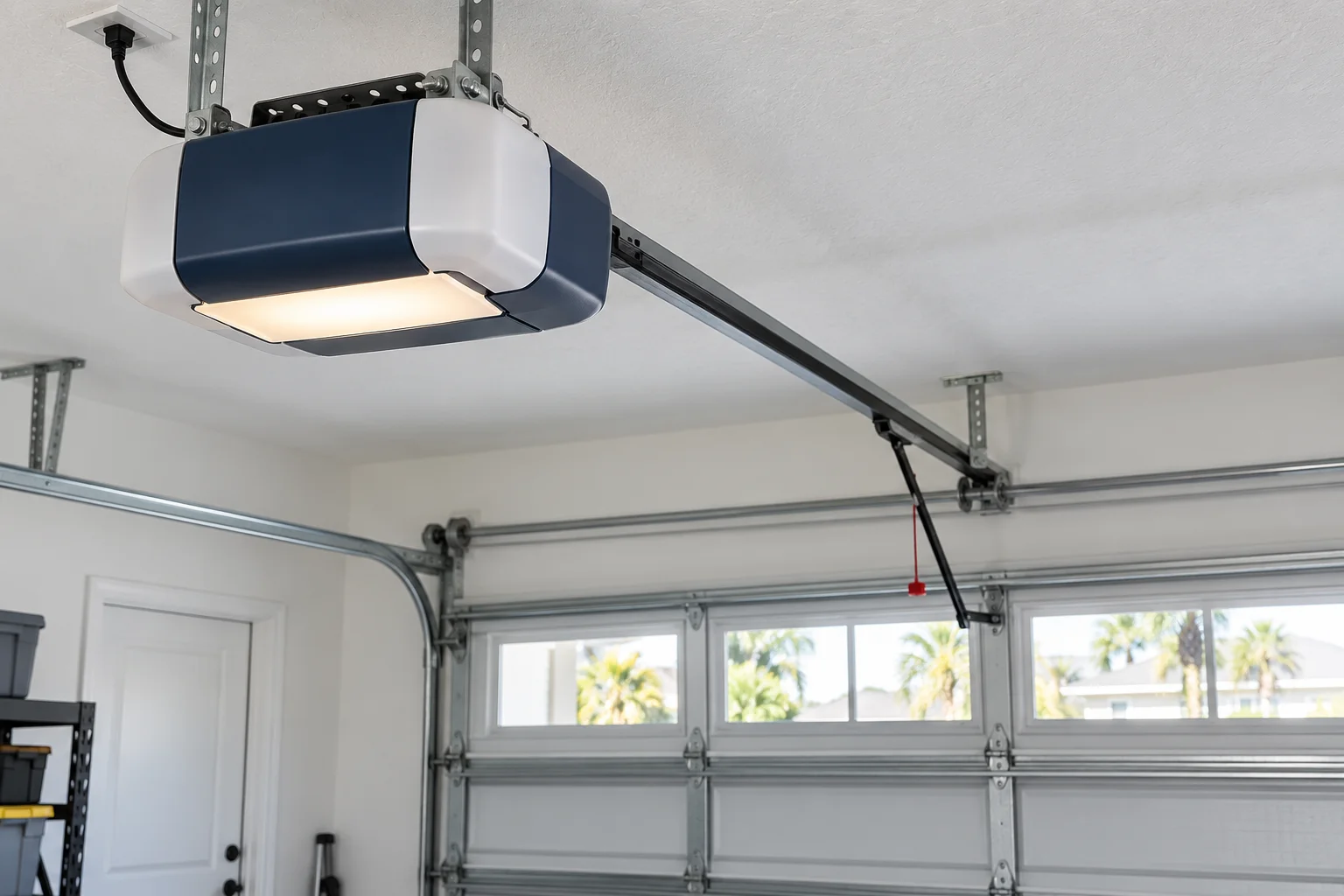
Keep the two pieces of equipment separate
The door has its own sections, rollers and counterbalance. The opener has its own drive and controls. Different manufacturers may have supplied them, so a label on one does not identify the other. Keep any accessible model details with the request.
Make the next conversation useful
Explain the current door position and whether another entrance is available. Mention a recent power outage or impact without assuming it caused the fault. Ask whether the visit includes assessment of both the door and operator before a replacement is recommended.
Your questions
Should I buy a new remote first?
Only after compatibility and the cause of the fault have been established. A new remote will not address a door that cannot move safely.
Should I disconnect a door that looks damaged?
No. Leave an unstable, heavy or uneven door alone and arrange professional assessment.